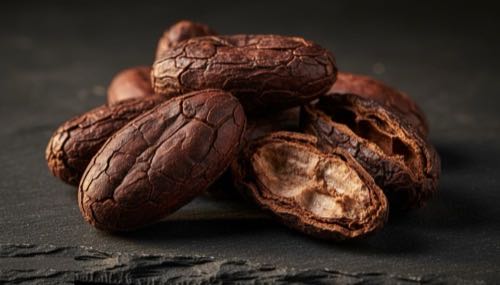
Mondulkiri, eastern Cambodia: mineral-laden volcanic soil at 800 m elevation. In 2014 we planted the first cacao trees in Cambodia's history and made it the world's 67th cacao origin.
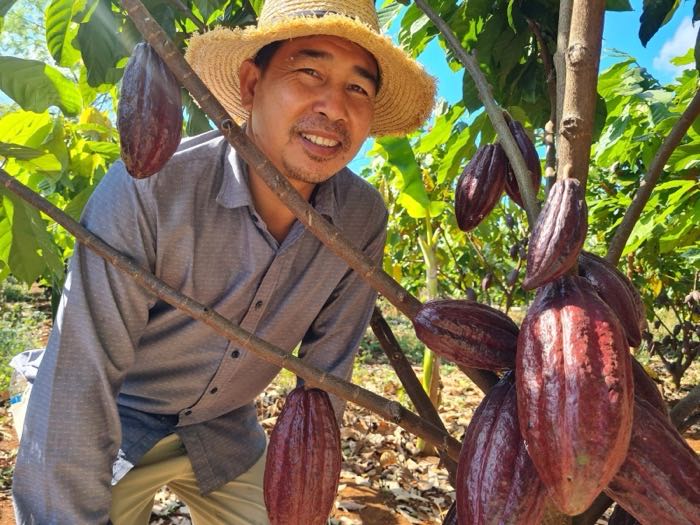
Our estate sits in the volcanic highlands of Mondulkiri province, near the Bu Sra waterfall. The altitude, rainfall, and mineral-rich soil give the beans a flavor profile found nowhere else, and every bag is traceable from tree to bag: origin, batch number, harvest date, grade.
Cacao is native to the Americas. It reached Southeast Asia by three routes, and the last one ends in Mondulkiri.
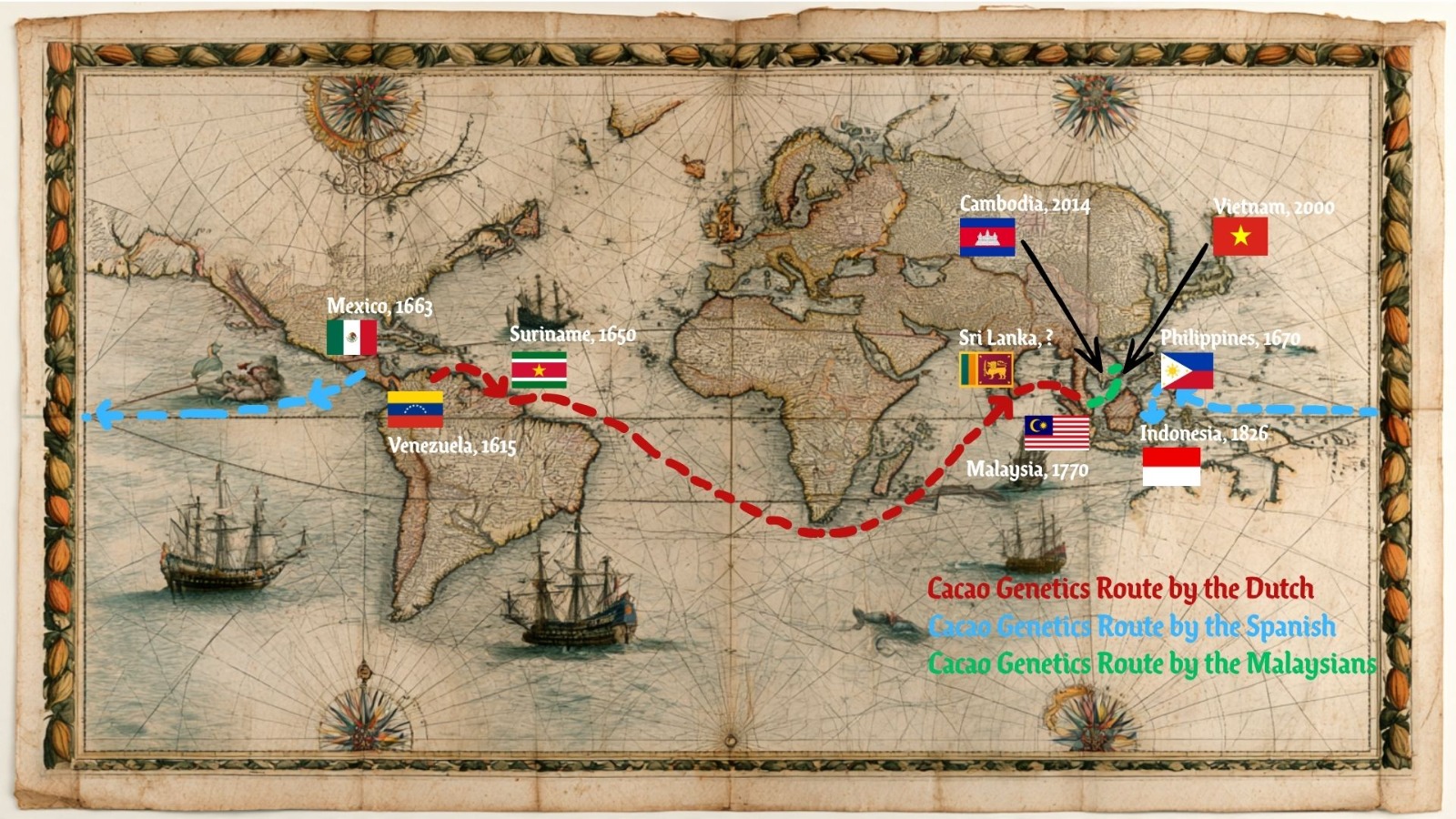
1663 · Spanish Route
Spanish galleons carried cacao across the Pacific from Acapulco to the Philippines in 1663, making it Asia’s first cacao-growing country. From there it spread to Indonesia.
1650s–1770 · Dutch Route
In the 1600s the Dutch dominated the cacao trade from Venezuela (plantations by c. 1615) and grew cacao in Suriname from around 1650. Cacao most likely reached Dutch-held Malacca via Ceylon around 1770, though the Ceylon link isn’t yet confirmed by written records.
2000–2014 · Malaysian Route
Around 2000, Malaysian Forastero × Trinitario clones went to Vietnam. In 2014 Kamkav planted them in Mondulkiri, creating Cambodia’s first commercial cacao farm.
Over a decade we developed at least 19 sub-species across our Trinitario and Forastero plantings. Controlled wooden-box fermentation and slow sun-drying translate the terroir into the cup: bright red fruit notes and a clean, balanced finish, consistent batch after batch.
See How We Process It →